
What Should You Look for in Behavioral & Mental Health Practice Management Software?
1. Does the Technology Support Behavioral/Mental Health Workflows?
Behavioral and mental health practices require workflows that differ from many traditional medical environments.
Your system should support recurring appointments, group therapy, treatment plans, and coordinated care across providers.
Look for tools that allow flexible session types, long-term scheduling, and documentation aligned with behavioral health needs.
When workflows match how your practice operates, staff spend less time navigating systems and more time supporting patients.
2. Is Scheduling Flexible and Easy for Patients?

Scheduling plays a critical role in access to care and patient satisfaction.
A strong practice management solution should reduce no-shows and make appointment management simple for both staff and patients.
Helpful scheduling features often include:
- Online appointment requests or self-scheduling
- Automated reminders through text or email
- Tools to manage cancellations and waitlists
Additionally, patient portals should allow clients to complete forms and review appointments before sessions begin.
How Does the System Support Financial and Administrative Efficiency?
3. Does It Simplify Billing and Revenue Management?

Billing is a common challenge for behavioral and mental health practices, especially when managing authorizations and payer rules.
The right solution should streamline billing processes and reduce manual data entry wherever possible.
Look for systems that offer:
- Integrated eligibility checks
- Built-in claim validation tools
- Clear visibility into claim status and payment trends
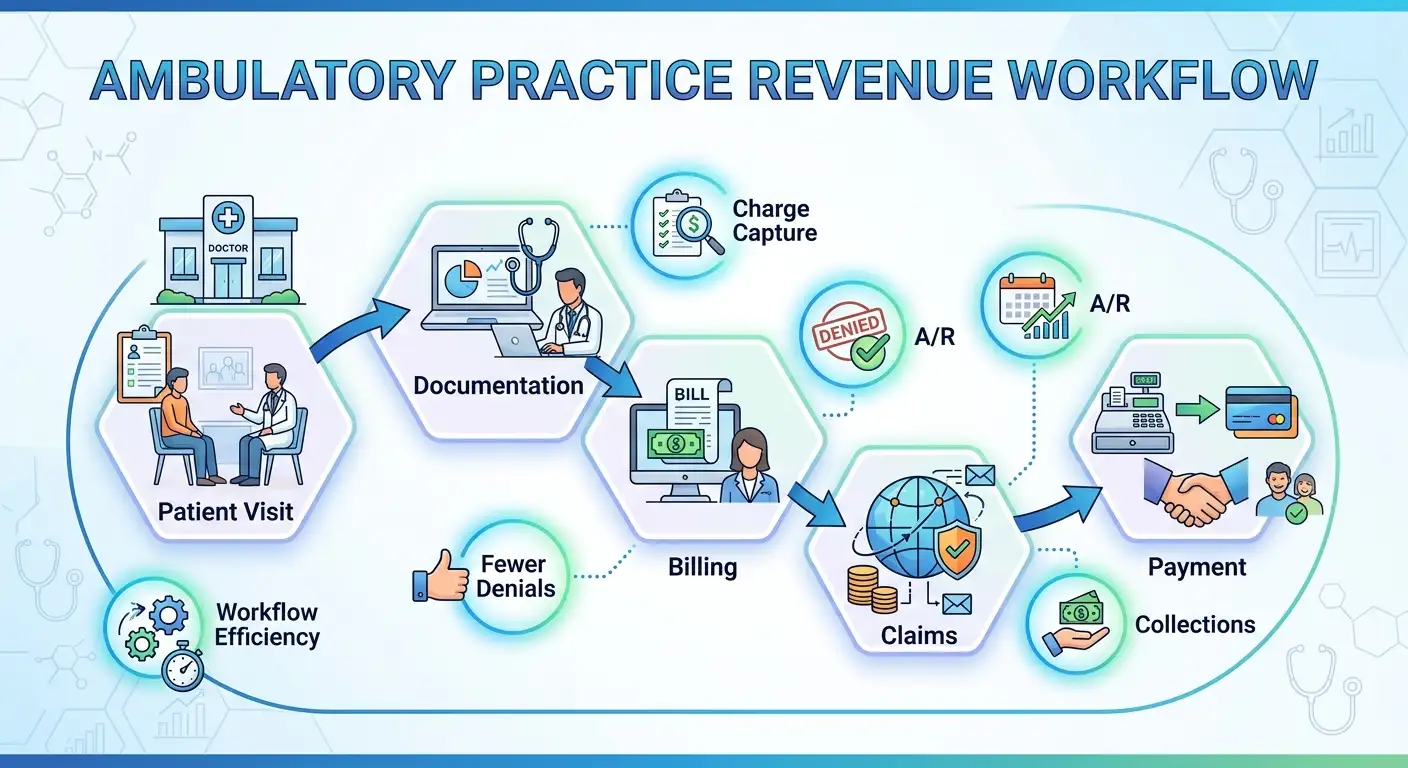
When billing workflows are connected to scheduling and documentation, practices experience fewer errors and more predictable cash flow.
4. Is the Platform Secure, Compliant, and Scalable?

Protecting patient information is essential in behavioral and mental health care. Any practice management solution should meet HIPAA requirements and use secure, encrypted data storage.
Cloud-based platforms also allow clinicians and staff to access systems securely from multiple locations.
As your practice grows, the system should scale easily without requiring major changes or costly upgrades.
For more information on healthcare compliance standards, visit the U.S. Department of Health & Human Services.
Why Ongoing Support and Optimization Matter
5. Does the Vendor Offer Guidance Beyond the Software?

Even the best technology requires proper setup and ongoing optimization to deliver real value.
Practices benefit from partners who understand healthcare workflows and can tailor systems to specific operational goals.
Support services may include workflow assessments, configuration guidance, staff training, and performance reviews.
These services help ensure technology continues to support efficiency, compliance, and long-term growth.
Virtual OfficeWare works with healthcare organizations to evaluate systems, optimize workflows, and align technology with practice needs.
Learn more about operational support for behavioral health practices here.
You may also find value in this related resource on integrated mental health care models: Bringing Mental Health into the Exam Room: A Practical Approach for Primary Care Practices