


Running an ambulatory medical practice means balancing patient care with a long list of administrative responsibilities. Scheduling, insurance verification, prior authorization, documentation, billing, patient communication, and follow-up all require staff time.
The problem is not that these tasks exist. It is how much time can be lost when they rely on repetitive manual work, disconnected systems, or inefficient workflows.
For practice leaders, the real cost of administrative burden may be more than payroll. Lost staff time can affect productivity, patient access, revenue cycle performance, and the overall experience for both patients and employees.
Where Does Administrative Work Consume the Most Staff Time?
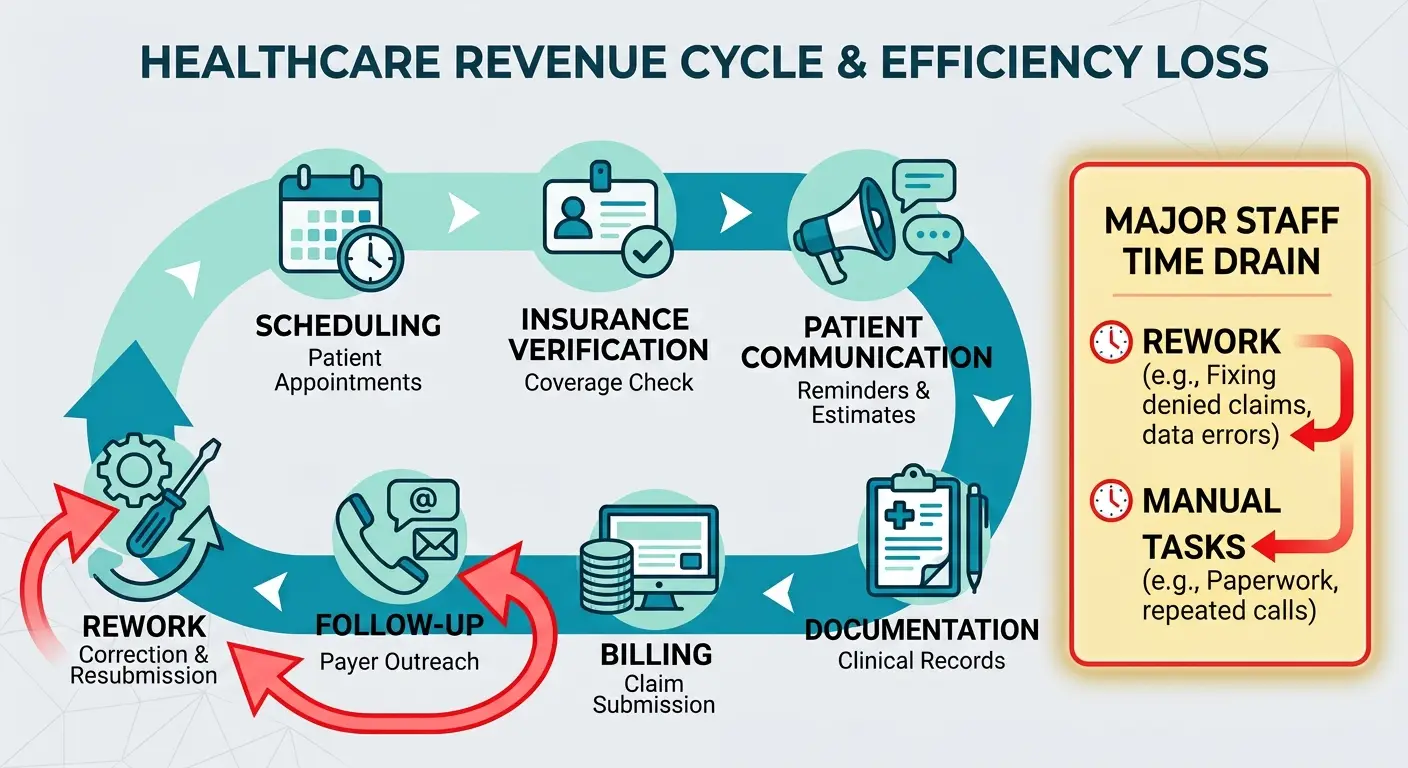
Administrative burden in medical practices often builds gradually. A few extra minutes spent on individual tasks may not seem significant, but repeated across hundreds of appointments and transactions, those minutes add up.
Common sources of administrative workload include:
- Scheduling, rescheduling, and appointment reminders
- Insurance eligibility and benefit verification
- Prior authorization and referral management
- Repeated data entry between systems
- Patient phone calls and routine questions
- Documentation and inbox management
- Claim corrections, denials, and follow-up
- Tracking outstanding tasks across departments
Prior authorization is one example. CMS continues to pursue electronic prior authorization as a way to reduce manual work and improve information exchange between providers, payers, and health IT systems.
The broader lesson is important: administrative burden is often a workflow problem, not simply a staffing problem.
Are Staff Spending Time Fixing Problems Instead of Preventing Them?
One of the clearest warning signs is when employees spend significant time correcting preventable issues.
For example, a missing insurance detail can create additional work for front-office staff. An incomplete workflow can delay charge entry. A disconnected billing process can require staff to move information between systems or repeatedly investigate the same issue.
These problems can create a cycle:
Manual task → delay or error → correction → additional staff time
Over time, the practice may need more staff capacity simply to keep existing processes moving.
How Can Technology Reduce Administrative Burden?
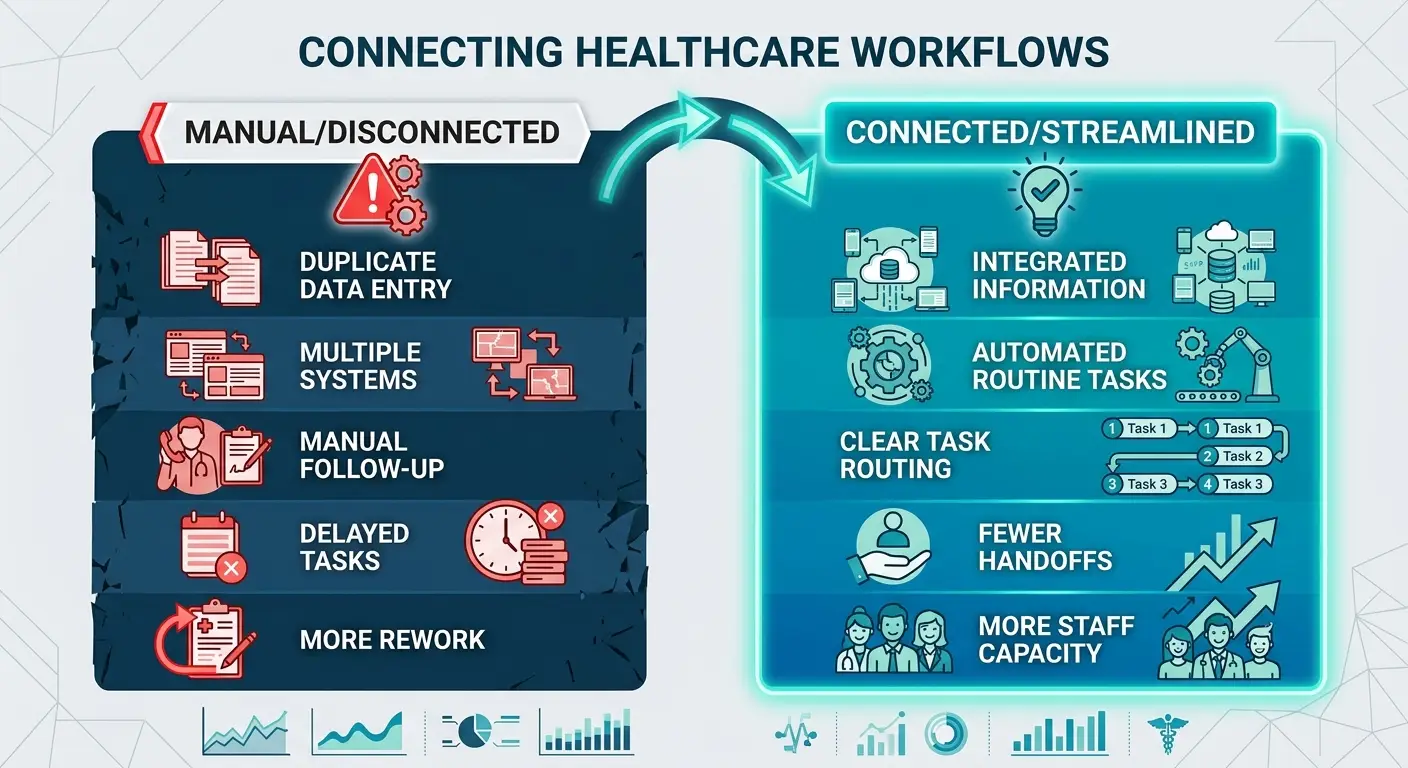
Technology can help, but adding another application does not automatically make a practice more efficient.
The better question is: Does technology eliminate unnecessary work or simply move it somewhere else?
Effective practice technology should help reduce repetitive tasks, connect related workflows, and give staff better visibility into what needs attention.
For example, integrated practice management and EHR systems can connect scheduling, patient information, billing, and clinical workflows. Automation can also help with routine communications, eligibility checks, task routing, and other repetitive processes.
However, technology works best when it supports a well-designed workflow. If a practice automates a fragmented process without addressing the underlying problem, staff may still spend considerable time managing exceptions.
Start With the Workflow, Not the Software
Before investing in new technology, practice leaders should map where administrative work actually occurs.
Ask:
- Which tasks are performed manually every day?
- Where is information entered more than once?
- Which processes require staff to switch between systems?
- Where do tasks frequently get delayed or returned?
- Which questions or requests generate the most phone calls?
- Where are billing or scheduling problems creating downstream work?
- Which tasks could be automated without compromising patient service?
This exercise can reveal opportunities that are easy to overlook.
For example, Virtual OfficeWare Healthcare Solutions (VOWHS) recently explored how seemingly small workflow bottlenecks can affect productivity across clinical, administrative, and financial operations. The same principle applies here: small inefficiencies can become significant when they occur repeatedly.
What Should Ambulatory Practices Do Next?
Reducing administrative burden does not necessarily require a major technology overhaul. Start by identifying where staff time is going and determine which problems have the greatest operational impact.
Practice leaders can begin with these steps:
- Track repetitive work. Identify tasks that consume significant staff time each week.
- Look for duplicate entry. Re-entering information is a common source of wasted effort.
- Connect workflows. Look for gaps between scheduling, clinical, patient communication, and billing processes.
- Prioritize automation carefully. Start with repetitive, rules-based tasks where automation can provide clear value.
- Measure the results. Track time saved, delays reduced, errors prevented, or other meaningful outcomes.
- Review technology fit. Make sure your systems support the way your practice actually operates.
The goal is not to eliminate every administrative task. It is to make sure your people spend their time where it creates the most value.
For ambulatory practices, that can mean giving staff more time to support patients, resolve complex issues, strengthen revenue cycle performance, and keep daily operations moving.