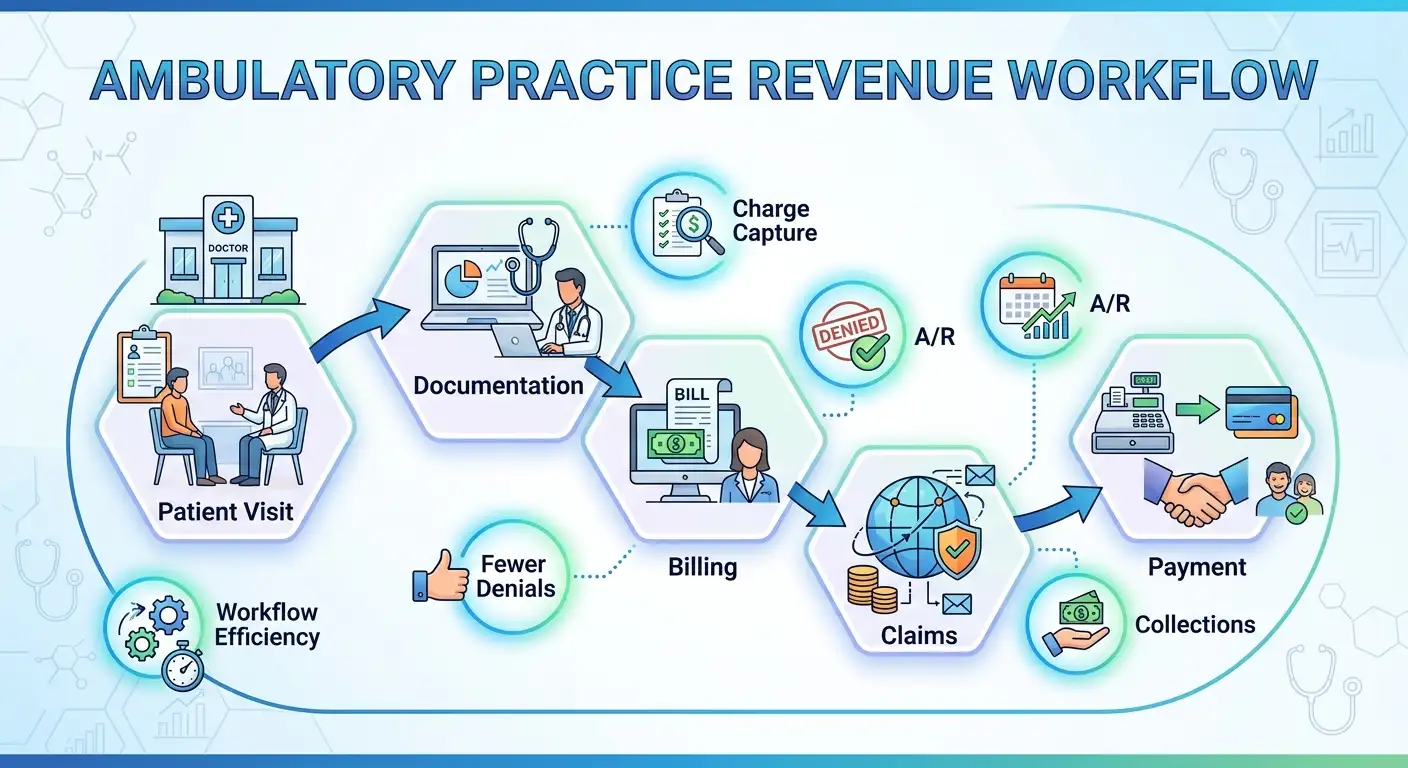


Every ambulatory practice strives to deliver exceptional patient care while keeping operations efficient. Yet hidden workflow bottlenecks often go unnoticed, quietly slowing ambulatory practice productivity day after day.
Although these inefficiencies may seem minor on their own, they can add up quickly. As a result, staff spend more time on administrative tasks, providers experience unnecessary delays, and patients may wait longer for care.
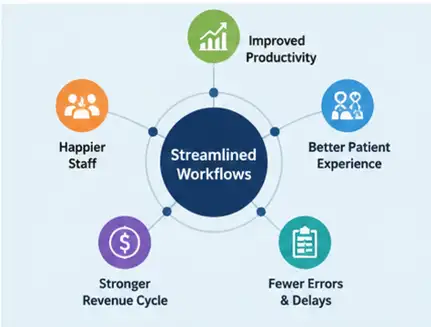
Fortunately, many of these workflow challenges are both identifiable and preventable. By recognizing where productivity is lost, practice leaders can streamline operations, reduce administrative burden, improve staff satisfaction, and create a better experience for both patients and providers.
Where Do Workflow Bottlenecks Usually Occur?
Busy medical practices rely on dozens of connected workflows every day. When one process slows down, everything else tends to follow.
For example, a missing insurance verification may delay patient check-in. As a result, providers start appointments late. Billing teams then spend extra time correcting claim information. Eventually, reimbursement slows, and staff frustration grows.
Likewise, administrative teams often spend unnecessary time switching between systems, searching for patient information, or repeating manual tasks.
Although each interruption seems minor, they quietly reduce productivity across the entire practice.
Common workflow bottlenecks include:
- Re-entering patient information into multiple systems
- Delays verifying insurance eligibility
- Manual referral tracking
- Missed documentation during patient visits
- Waiting for provider approvals
- Disconnected scheduling and billing workflows
- Time spent correcting preventable claim errors
- Manual patient reminders and follow-up calls
Consequently, these small interruptions create larger operational challenges over time.
Why Do Small Delays Have Such a Big Impact?
Many practice managers focus on major operational problems. However, smaller inefficiencies often occur hundreds of times each week.
Imagine just one minute lost during every patient visit.
Now multiply that across dozens of providers and hundreds of appointments every week.
Suddenly, those “small” delays become hours of lost productivity.
Moreover, administrative staff often spend more time fixing problems than preventing them. This creates unnecessary stress while limiting the time available for higher-value work.
As practices continue facing staffing shortages and growing patient volumes, every minute matters.
How Workflow Inefficiencies Affect the Entire Practice
Workflow bottlenecks rarely affect just one department.
Instead, they create ripple effects across clinical, administrative, and financial operations.
Patient Experience
Patients notice longer wait times, delayed callbacks, and scheduling issues. Consequently, satisfaction and loyalty may decline.
Provider Productivity
Physicians and clinical staff lose valuable time completing administrative work instead of focusing on patient care.
Staff Morale
Repeated interruptions increase frustration and contribute to employee burnout. Over time, staff turnover becomes more likely.
Revenue Cycle Performance
Incomplete documentation, delayed coding, and manual billing processes can increase claim denials and slow reimbursements.
Therefore, improving workflow efficiency benefits both patient care and financial performance.
Could Technology Help Remove Everyday Bottlenecks?

The answer is often yes.
Modern healthcare technology continues evolving to simplify repetitive administrative work while improving communication across the practice.
For example, today’s cloud-based practice management and electronic health record (EHR) platforms can help automate many routine tasks.
These may include:
- Online patient scheduling
- Digital patient registration
- Automated appointment reminders
- Real-time insurance eligibility verification
- Integrated clinical documentation
- Electronic referrals
- Billing workflow automation
- AI-assisted documentation and pre-visit preparation
Additionally, integrated workflows reduce duplicate data entry while helping staff work from one centralized system.
As a result, practices spend less time correcting problems and more time serving patients.
What Are the First Signs Your Practice Has Workflow Bottlenecks?
Many workflow issues remain hidden until they begin affecting performance.
Ask yourself these questions:
- Are staff frequently performing the same task more than once?
- Do providers spend excessive time documenting after clinic hours?
- Are claim corrections becoming routine?
- Does patient check-in take longer than expected?
- Are referral requests delayed?
- Do employees frequently switch between multiple systems?
- Is staff burnouts becoming more common?
If you answered “yes” to several of these questions, your workflows may be limiting productivity more than you realize.
Small Improvements Create Meaningful Results

The good news is that workflow optimization doesn’t always require major organizational change.
Instead, practices often see meaningful improvements by identifying repetitive tasks and eliminating unnecessary steps.
For example, automating patient communication, improving documentation workflows, integrating scheduling and billing, and optimizing revenue cycle processes can significantly reduce administrative burden.
Furthermore, incremental improvements often create momentum for broader operational success.
Over time, these changes help improve efficiency, strengthen financial performance, reduce staff frustration, and enhance the patient experience.
Additional Resources
Learn more about healthcare workflow improvement from these trusted organizations:
- Centers for Medicare & Medicaid Services (CMS): https://www.cms.gov
- Agency for Healthcare Research and Quality (AHRQ): https://www.ahrq.gov
You may also find these resources helpful from Virtual OfficeWare Healthcare Solutions:
- Resource Hub: https://vowhs.com/resource-hub/
- End-to-End Billing: https://vowhs.com/revenue-cycle-management/
- Practice Management & EHR Solutions: https://vowhs.com/solutions
Ready to Improve Workflow Efficiency?
Hidden workflow bottlenecks don’t have to become permanent obstacles.
At Virtual OfficeWare Healthcare Solutions, we help ambulatory practices identify opportunities to streamline workflows, reduce administrative burden, improve revenue cycle performance, and support better patient care through proven technology and personalized services.
Whether you’re evaluating a new cloud-based EHR, optimizing your current workflows, or exploring revenue cycle management services, our team is here to help.