

Prior authorization can create a frustrating cycle for medical practices. Staff chase approvals, providers gather additional documentation, and patients wait for care. Meanwhile, administrative work continues to pile up.
In 2027, new federal requirements will help move certain health plans toward more electronic prior authorization and better information exchange. For ambulatory practices, this is a good reason to review existing processes and prepare for changes in how authorization information moves between payers and providers.
The good news? Practices can start preparing now. By reviewing technology, documentation, and staff workflows, leaders can identify gaps before new electronic processes take effect.
What Is Changing With Prior Authorization in 2027?
Beginning January 1, 2027, certain health plans must implement standardized technology to support electronic information exchange. These requirements are part of the Centers for Medicare & Medicaid Services (CMS) Interoperability and Prior Authorization Final Rule.
The rule affects specified Medicare Advantage, Medicaid, Children’s Health Insurance Program (CHIP), and federally facilitated Marketplace plans. However, requirements vary by payer type and program.
One key change is the Prior Authorization API. This technology is designed to help providers check coverage requirements, identify needed documentation, submit requests, and receive decisions electronically.
Importantly, the 2027 deadline primarily establishes new technology requirements for impacted health plans. It does not require every medical practice to replace its EHR. However, practices should review their current systems and determine whether they can support evolving electronic workflows.
For details, see the CMS Electronic Prior Authorization Overview.

Will These Changes Affect Every Medicare Advantage Plan?
The federal requirements apply to Medicare Advantage organizations and other specified health plans. They do not apply to every insurance plan or every type of authorization.
Additionally, the 2024 final rule focuses on medical items and services, excluding drugs from its prior authorization API requirements. CMS proposed additional drug-related changes in 2026. However, proposed changes should not be confused with finalized requirements.
For this reason, practices should review the plans their patients commonly use and confirm each payer’s authorization procedures.
How Can Practices Prepare Their Prior Authorization Workflows?
Electronic prior authorization may reduce manual work over time. However, technology alone will not fix incomplete documentation, unclear responsibilities, or inconsistent follow-up.
Instead, practices should start by examining how authorization requests move through the office today.
1. Review Your EHR and Electronic Prior Authorization Capabilities
First, ask your EHR vendor what electronic prior authorization features are available and what updates are planned for 2027.
CMS recommends that providers discuss integration timelines, system capabilities, testing, and staff training with their EHR vendors. As a result, starting these conversations now can help practices identify potential gaps early.
Consider asking:
- Can our system support electronic prior authorization requests?
- Which payer connections are available or planned?
- Can staff track requests and identify required documentation?
- Will we need additional integrations, modules, or training?
- How will our vendor communicate updates and implementation timelines?
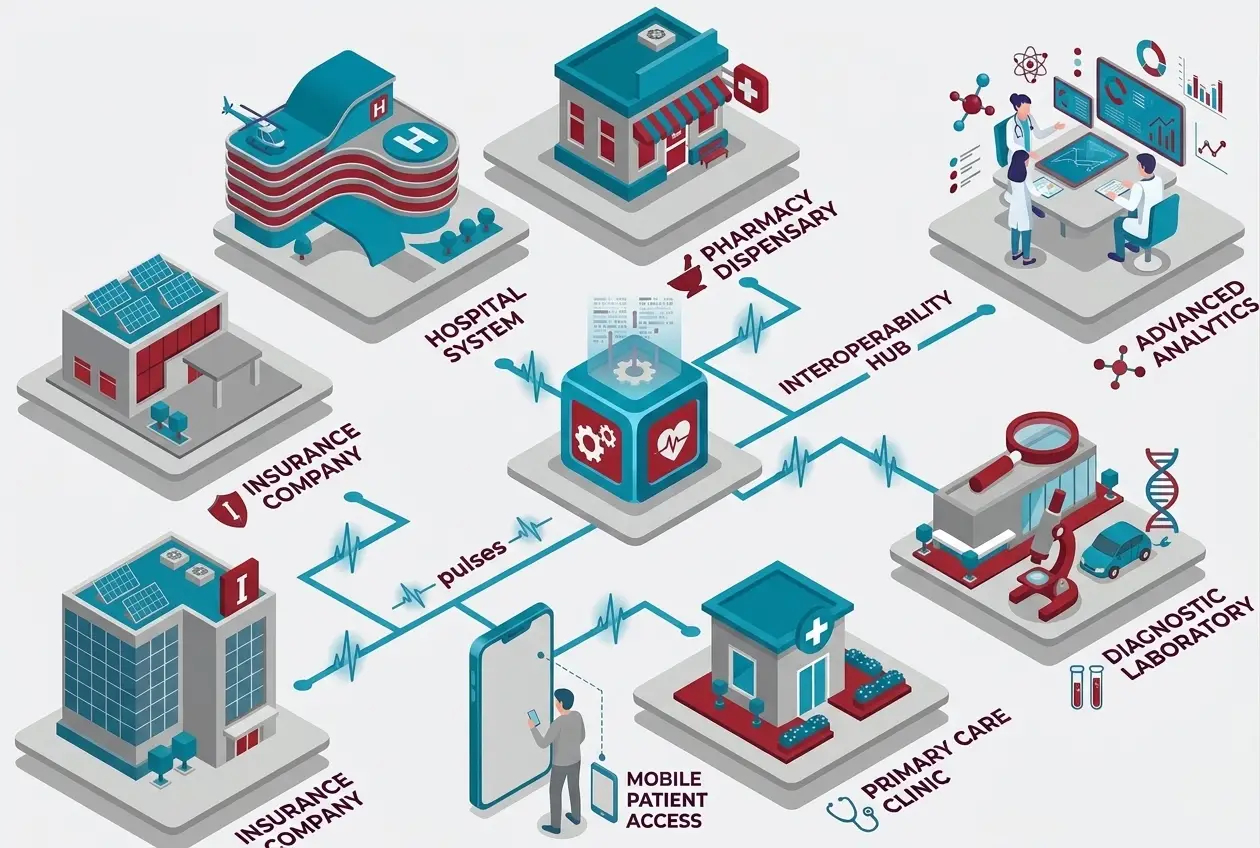
Also, consider how well your EHR connects with other systems. Our article on EHR interoperability for medical practices explains why connected information matters across clinical and administrative workflows.
2. Strengthen Documentation and Staff Processes
Even with better technology, authorization requests still depend on accurate information and appropriate supporting documentation.
For example, missing clinical notes, incomplete orders, or unclear follow-up responsibilities can delay an authorization. These gaps can also create extra work for providers and administrative teams.
To improve consistency, consider these steps:
- Establish a standard process for checking authorization requirements before scheduled services.
- Assign responsibility for verifying coverage, submitting requests, and monitoring approvals.
- Create a consistent method for collecting supporting documentation.
- Track pending requests and assign follow-up tasks.
- Review recurring delays to identify their underlying causes.
Next, document the workflow so staff can follow the same process across providers and locations. This also makes it easier to identify tasks that could be simplified or automated.
For more ideas, explore medical practice workflow automation. It offers practical guidance on reducing repetitive work without adding unnecessary complexity.
What Should Ambulatory Practices Do Next?
With 2027 approaching, now is a practical time to review authorization processes and prepare for the year ahead. Rather than making rushed technology decisions, focus on the changes most likely to affect your practice.
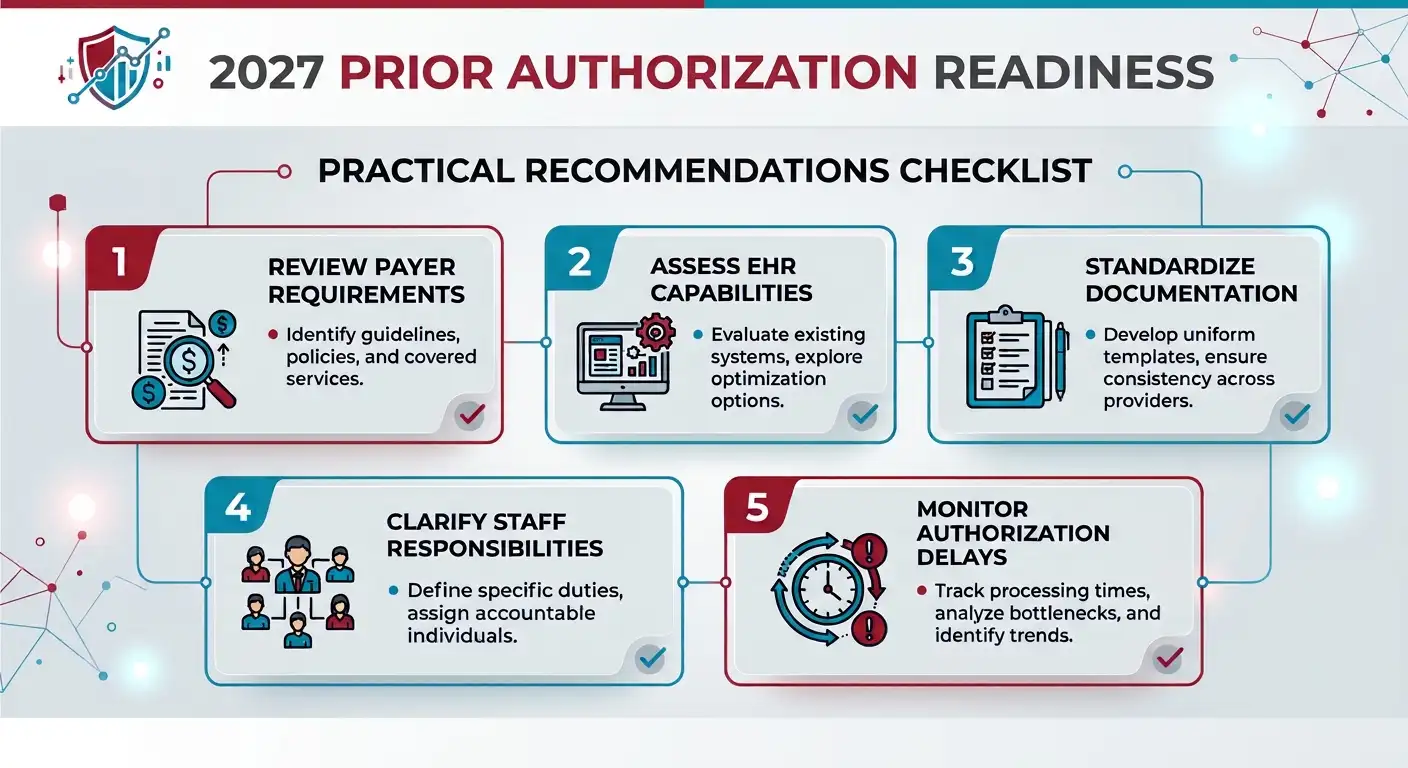
Start with these actions:
- Review payer requirements. Identify the plans your patients use and confirm their current authorization procedures.
- Assess technology readiness. Ask your EHR vendor about electronic prior authorization capabilities and planned updates.
- Identify workflow bottlenecks. Look for duplicate data entry, missing documentation, and delays in follow-up.
- Prepare your team. Clarify staff responsibilities and provide training as workflows change.
- Monitor performance. Track turnaround times, incomplete requests, appointment delays, and authorization-related denials.
Together, these steps can help your practice prepare for evolving requirements while improving everyday operations. Better workflows may also reduce administrative rework and help prevent avoidable delays in patient care.