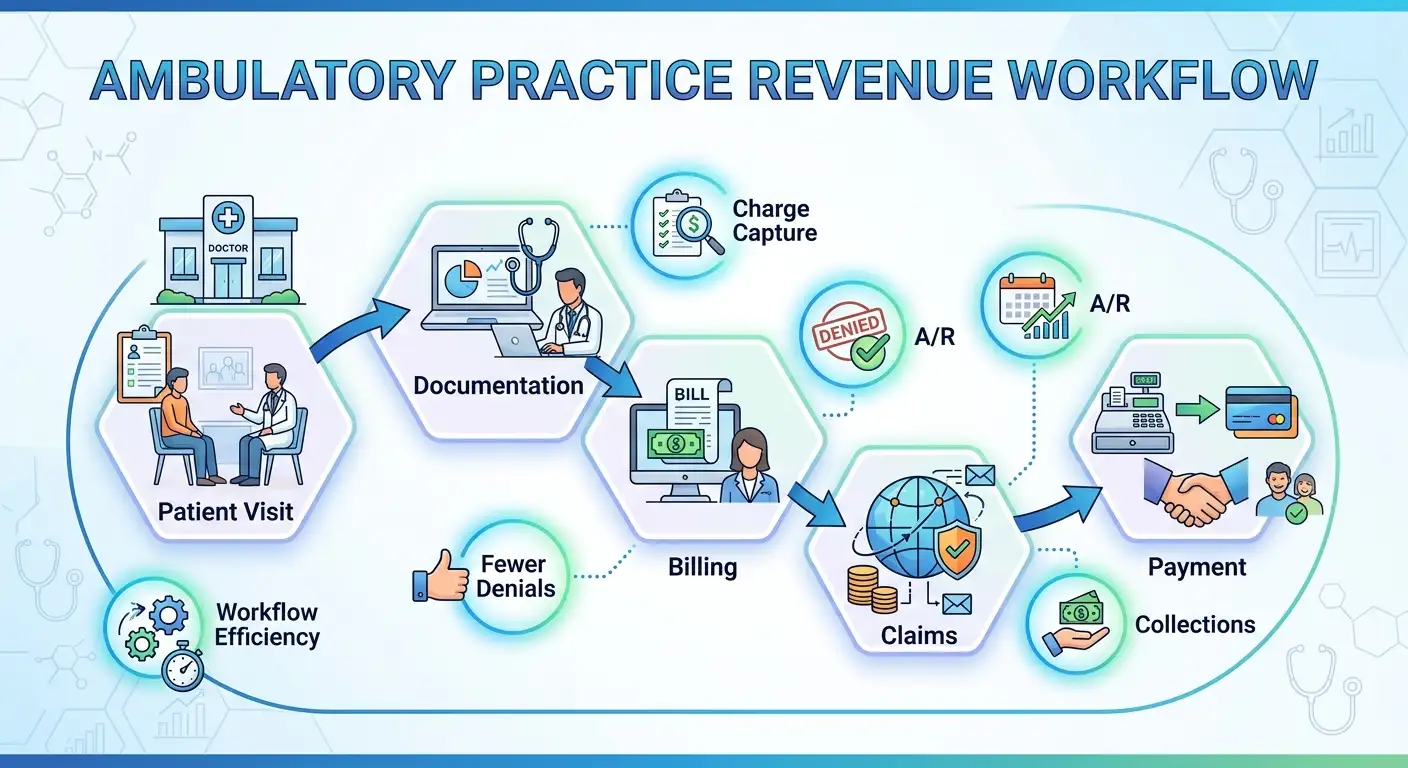


Healthcare leaders often focus on major challenges like staffing shortages, declining reimbursements, and growing administrative demands. However, many ambulatory practices overlook how small workflow gaps contribute to significant revenue losses.
These everyday process breakdowns can delay reimbursement, increase claim denials, and quietly reduce practice revenue over time.
A missed insurance verification. An unsigned provider note. A delayed charge entry. An unworked denial.
Each issue may seem minor on its own. Yet together, they create unnecessary delays, lost reimbursement, and higher administrative costs.
The good news is that these problems are often preventable. With the right technology, consistent workflows, and experienced revenue cycle support, ambulatory practices can improve financial performance without adding more work to already busy teams.
If you’re looking for additional strategies to improve financial performance, explore our Resource Hub for expert insights on revenue cycle management, practice operations, healthcare technology, and AI solutions.
Why Do Small Workflow Gaps Become Expensive?
Revenue leakage rarely happens because of one major mistake. Instead, it develops through repeated breakdowns across the patient journey.
According to MGMA, many practices identify denials, front-end processes, coding, and billing workflows as their largest sources of revenue leakage. These issues often begin with simple operational gaps rather than complex billing problems.
As a result, practices spend more time correcting errors instead of preventing them.
Common workflow gaps include:
- Incomplete patient registration
- Missed eligibility verification
- Delayed prior authorizations
- Documentation completed after billing deadlines
- Missing charges or modifiers
- Slow denial follow-up
- Inconsistent patient collections
Consequently, every additional handoff creates another opportunity for revenue to slip away.
Learn more about identifying hidden financial risks in our blog, Spotting Hidden Revenue Gaps Before They Hurt Your Practice, where we discuss additional warning signs and practical ways to protect your bottom line.
Where Does Revenue Leakage Usually Start?
The Front Desk

First impressions matter financially.
When insurance information is entered incorrectly or eligibility is not verified before the visit, billing problems often follow.
Likewise, missing authorizations can delay payment or lead to preventable denials.
Therefore, strengthening front-end workflows reduces downstream rework.
Clinical Documentation
Providers should focus on patient care—not paperwork.
However, incomplete documentation often delays coding and claim submission. Missing details may also result in lower reimbursement or payer requests for additional information.
For that reason, documentation tools that simplify provider workflows can improve both efficiency and revenue capture.

Billing and Revenue Cycle Management
Even clean claims require ongoing attention.
Denied claims that sit untouched quickly become aging accounts receivable. Meanwhile, underpayments and coding discrepancies may go unnoticed without routine monitoring.
As a result, practices collect less revenue than they have actually earned.
How Can Ambulatory Practices Close These Workflow Gaps?
Fortunately, most workflow problems have practical solutions.
Rather than adding more manual work, successful practices improve communication between clinical, administrative, and billing teams.
Consider these best practices:
- Standardize patient intake procedures.
- Verify eligibility before every visit.
- Automate appointment reminders and patient communications.
- Capture charges as close to the visit as possible.
- Monitor denial trends weekly.
- Review aging A/R on a regular schedule.
- Use reporting dashboards to identify recurring bottlenecks.
- Partner with experienced revenue cycle specialists when additional support is needed.
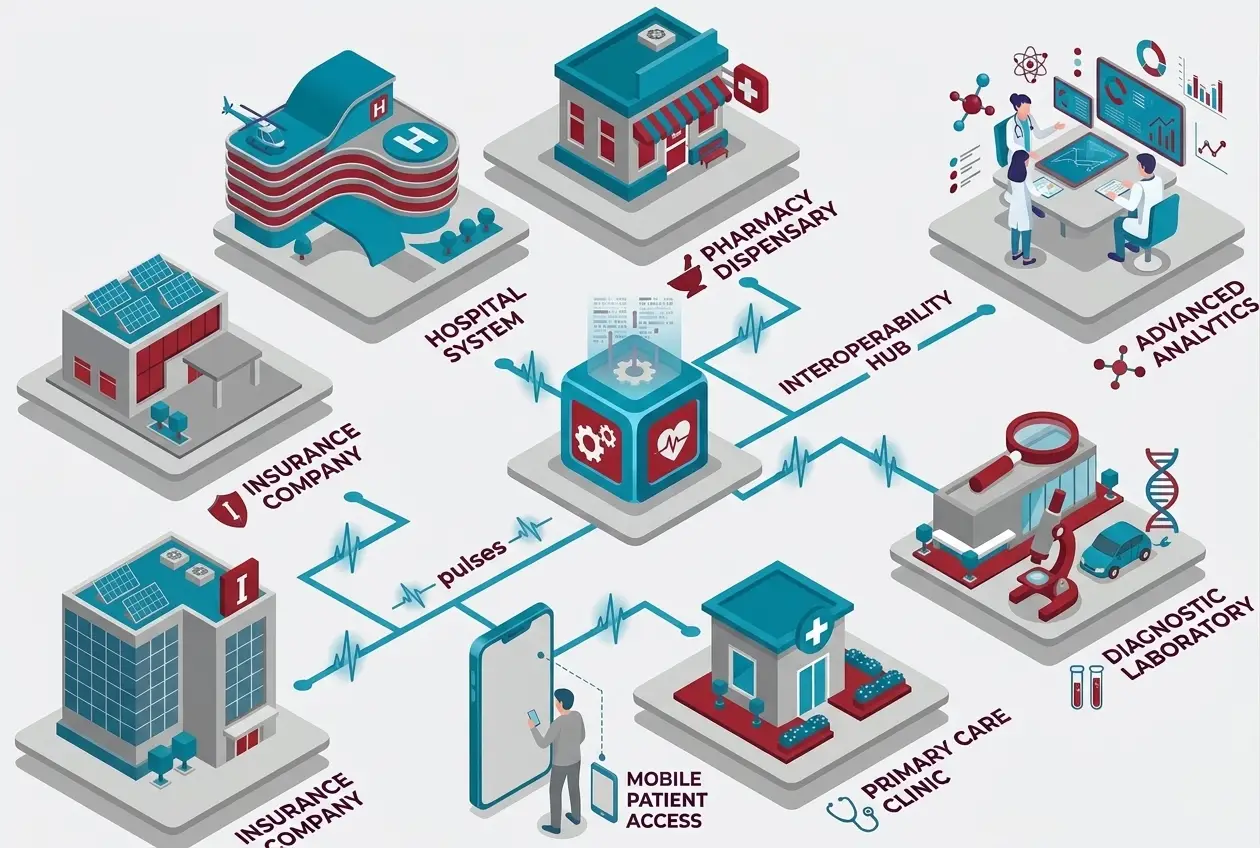
In addition, integrated practice management software helps teams work from the same information. This reduces duplicate work while improving visibility across the revenue cycle.
The Healthcare Financial Management Association (HFMA) also emphasizes that standardized revenue cycle processes and ongoing monitoring are essential for improving financial outcomes.

Why Technology Alone Isn’t Enough
Software is an important part of the solution. Nevertheless, technology works best when supported by well-designed workflows.
For example, automation cannot correct inconsistent processes or incomplete documentation on its own.
Instead, practices achieve better outcomes when technology, staff training, and revenue cycle expertise work together.
That combination helps reduce administrative burden while improving collections, productivity, and patient satisfaction.
What Should Practice Leaders Review First?
If your practice wants to improve cash flow, begin by asking a few simple questions.
- Are claims being submitted promptly?
- Where do denials occur most often?
- Are prior authorizations delaying care?
- How many claims require rework?
- Are providers documenting visits efficiently?
- Is your A/R continuing to grow?
Answering these questions often reveals opportunities that have been hiding in plain sight.
More importantly, addressing these issues early prevents small problems from becoming significant financial challenges.
Strengthen Your Workflow Before Revenue Slips Away
Small workflow gaps rarely stay small.
Instead, they compound over time, increasing denials, slowing payments, and creating unnecessary administrative work.
At Virtual OfficeWare Healthcare Solutions, we help ambulatory practices streamline operations through integrated EHR and practice management solutions, experienced revenue cycle services, and personalized support.
Whether you’re evaluating new software or looking to improve billing performance, our team can help identify opportunities to strengthen your workflow and protect your revenue.