
Your EHR may contain a wealth of patient and practice information. But if that information cannot move easily between the systems your practice relies on, its value is limited.
That is why EHR interoperability is becoming more important for ambulatory practices. The goal is not simply to connect systems. It is to make information available where and when it is needed, without creating more work for your staff.
At the same time, healthcare interoperability is evolving. Federal initiatives are expanding expectations around data exchange, payer-provider connectivity, and electronic prior authorization. For practice leaders, that makes interoperability less of a technical issue and more of an operational consideration.
What Is EHR Interoperability?
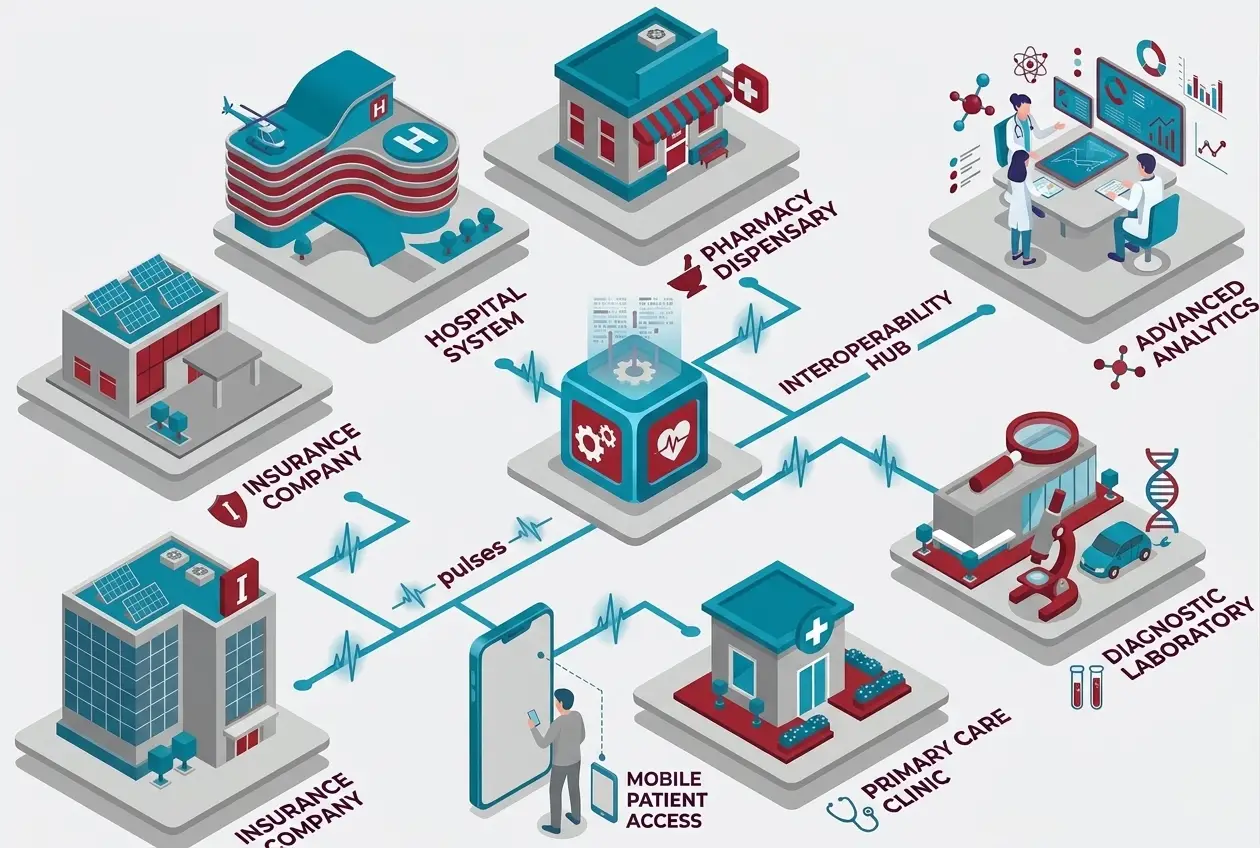
EHR interoperability is the ability of an electronic health record to exchange and use health information with other systems. This can include other EHRs, laboratories, pharmacies, health information networks, patient-facing applications, and payer systems.
Effective interoperability means information can move between systems in a standardized and usable way. It can reduce the need for staff to manually enter, retrieve, or reconcile the same information across multiple platforms.
For example, a well-connected workflow might allow information from an outside organization to become available within the patient’s record. Similarly, information from the practice can support care coordination, billing, reporting, or other downstream processes.
The Office of the National Coordinator for Health Information Technology (ONC) describes interoperability as an important part of delivering safe, effective, patient-centered care. Its nationwide Trusted Exchange Framework and Common Agreement (TEFCA) is designed to establish a common foundation for secure health information exchange.
Why Does Interoperability Matter to an Ambulatory Practice?
Interoperability can affect much more than clinical documentation. It can influence everyday workflows across the practice.
Consider areas such as:
- Clinical workflows: Providers can spend less time searching for information across disconnected systems.
- Care coordination: More accessible information can support communication among organizations involved in a patient’s care.
- Administrative efficiency: Connected systems can reduce duplicate data entry and manual processes.
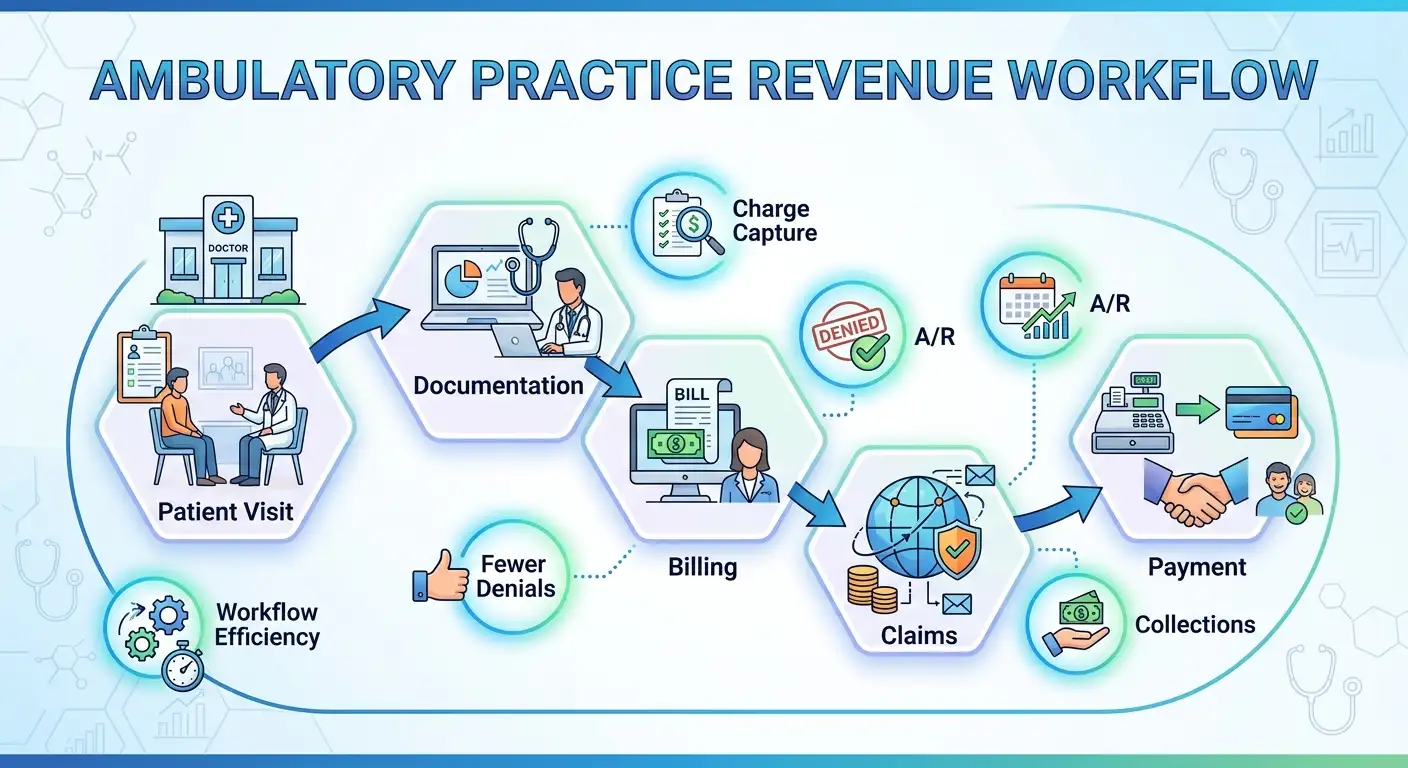
- Revenue cycle: Information flowing between clinical, practice management, and billing systems can support cleaner administrative workflows.
- Patient experience: Patients increasingly expect their health information and interactions to move with them.
However, interoperability does not automatically produce these benefits. The quality of the connection, the data being exchanged, and how well systems fit the practice’s workflow all matter.
How Is EHR Interoperability Changing?
Healthcare interoperability is moving beyond simply exchanging clinical records.
One important development is the increased use of standardized APIs, including FHIR, to exchange information between systems. The Centers for Medicare & Medicaid Services (CMS) has established interoperability requirements affecting certain Medicare Advantage, Medicaid, CHIP, and federally facilitated Marketplace payers.
For example, CMS requires impacted payers to implement Provider Access APIs that make specified claims, encounter, clinical, and prior authorization information available to eligible in-network providers. The Provider Access API requirements generally take effect January 1, 2027.
Prior authorization is another area where interoperability is evolving. CMS requires impacted payers to implement Prior Authorization APIs that support electronic exchange of requests and decisions. These requirements are intended to help providers determine requirements and exchange supporting information more efficiently.
CMS also issued a 2026 proposed rule that would extend electronic prior authorization requirements to certain drug-related processes and make additional changes to interoperability standards. Because this is a proposed rule, practices should distinguish these proposals from requirements that have already been finalized.
What Does This Mean for Practice Technology?
For practice leaders, the bigger question is not whether an EHR is technically “interoperable.”
Instead, ask whether your technology actually works together in the way your staff and providers need it to work.
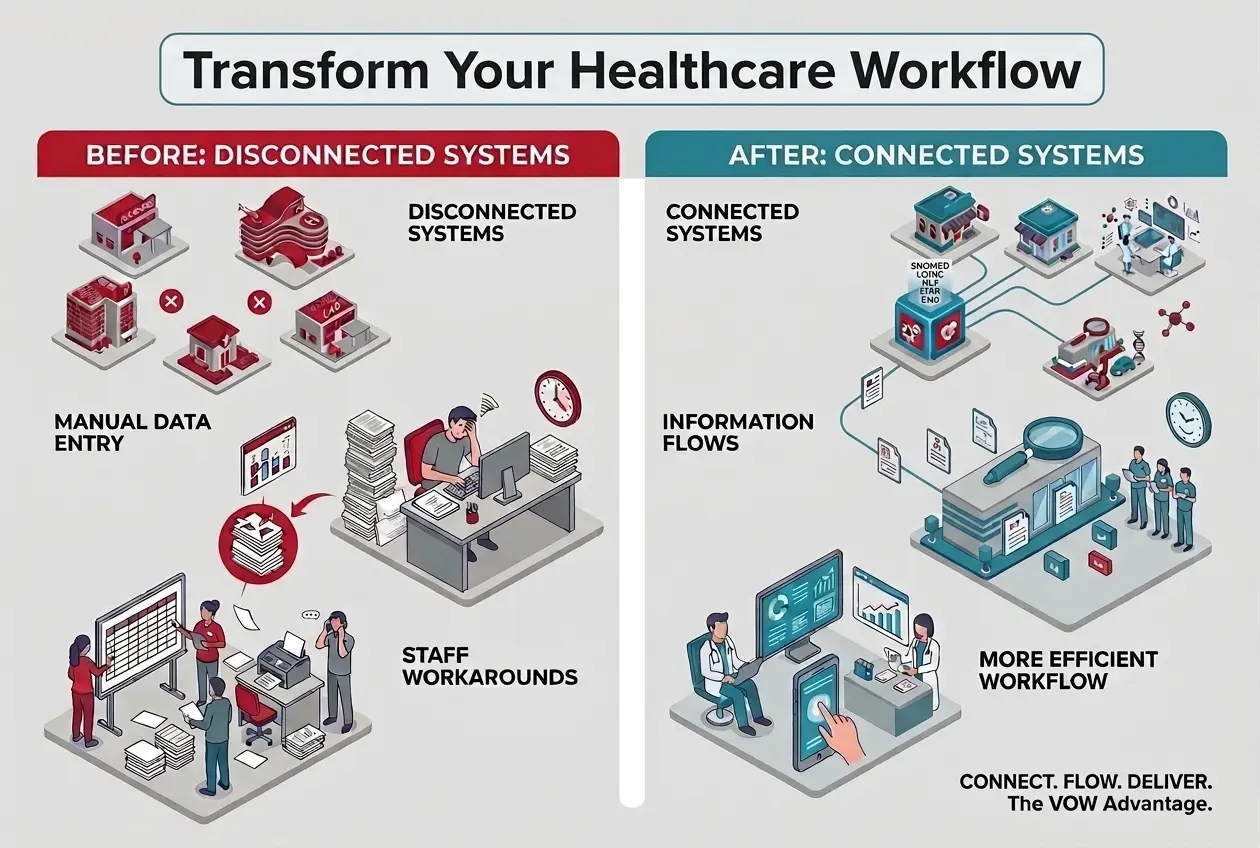
A practice can have several systems that technically exchange information while still requiring staff to:
- Log into multiple applications
- Re-enter patient or billing information
- Download and upload documents
- Manually reconcile data
- Track information through email, spreadsheets, or other workarounds
That is where interoperability becomes a workflow issue rather than simply a technology feature.
How Can Practices Evaluate Their EHR Interoperability?
Start by looking at the workflows where disconnected technology creates the most friction.
Ask Where Your Staff Still Work Around the Technology
Practice leaders can begin with a simple workflow review:
- Where is information entered more than once?
- Which systems require staff to switch between screens or applications?
- Where are outside records difficult to access?
- Are clinical and administrative systems sharing the information they need?
- How much manual work is involved in prior authorization?
- Does billing receive the information needed to move claims forward efficiently?
- Can practice leaders easily combine data from different systems for reporting and analysis?
These questions can reveal gaps that may not appear during an EHR software demonstration.
For example, your EHR may have strong clinical functionality, but your practice could still lose time if scheduling, billing, reporting, or patient engagement tools operate separately.
VOW’s Practice Management System resources highlight how integrated EHR and practice management functionality can connect scheduling, billing, performance metrics, and clinical information within a more unified workflow.
Likewise, interoperability can create more value when practice data can be used for meaningful decision-making. VOW’s recent Healthcare Data Analytics for Medical Practices article explores how information from EHR, billing, scheduling, and other workflows can help practice leaders identify operational and financial trends.
What Should Ambulatory Practices Do Next?
Interoperability is becoming a larger part of the healthcare technology landscape. However, practices do not need to pursue every new technology or connection at once.
Instead, focus on where better information flow could make the greatest practical difference.
Consider these next steps:
- Map your most important clinical and administrative workflows.
- Identify where staff manually move information between systems.
- Ask your EHR and technology vendors which interoperability standards and APIs they currently support.
- Determine whether connected systems actually reduce work for your staff.
- Review how clinical, scheduling, billing, reporting, and patient engagement data work together.
- Watch relevant CMS and ONC developments that could affect payer connectivity or administrative workflows.
- Evaluate technology based on the workflow improvements it can deliver, not simply its feature list.
Interoperability is ultimately about more than moving data. It is about making your practice’s technology work together so your people can spend less time managing information and more time using it.

See What Your Technology Could Be Doing Better and explore how the right EHR, practice management, billing, and healthcare technology solutions can better fit the way your practice works.