

How AI Patient Contact Centers Improve Practice Efficiency
Practice efficiency isn’t just an operational goal anymore—it’s a necessity.
Yet for many ambulatory medical practices, daily communication demands continue to grow. Phone calls never seem to stop. Appointment requests arrive throughout the day. Patients need answers quickly. Meanwhile, front-desk staff are expected to keep everything moving smoothly.
As a result, many teams feel stretched thin.
At the same time, patients are looking for faster, more convenient access to care. They don’t want to sit on hold. They don’t want to wait for callbacks. Instead, they expect the same level of responsiveness they experience in other industries.
This is where an AI patient contact center can make a meaningful difference.
By combining conversational AI with healthcare-specific workflows, practices can improve communication, reduce administrative burdens, and create a better experience for both patients and staff.
The Human Cost of the Hold Button

For many practices, the front desk serves as the nerve center of the organization.
However, it is also one of the most overwhelming areas.
On any given day, staff may be checking in patients, answering phones, scheduling appointments, handling insurance questions, and responding to refill requests—all at the same time.
Consequently, interruptions become constant.
While staff members are helping a patient at the front desk, several incoming calls may be waiting. Likewise, while they are answering one caller’s questions, another patient may be standing in line waiting for assistance.
Over time, this creates frustration on both sides of the conversation.
Patients experience long hold times and delayed responses. Staff experience stress, fatigue, and burnout.
More importantly, valuable face-to-face interactions suffer.
After all, healthcare teams want to focus on patients—not phone queues.
Fortunately, technology can help relieve that pressure.
Expanding Patient Access Around the Clock
Today’s patients expect healthcare to be more accessible.
They schedule travel online. They order groceries through an app. Therefore, they increasingly expect healthcare interactions to be just as convenient.
An AI-powered patient contact center helps meet those expectations.
Rather than sending callers to voicemail, the system answers 100% of calls on the first ring. In addition, patients can engage in natural conversations that feel helpful and responsive.
Even better, support is available 24/7.
Whether someone calls during lunch, after office hours, or on a weekend, they can still receive assistance.
Key capabilities include:
- Appointment scheduling and rescheduling
- Patient intake assistance
- Prescription refill requests
- Insurance-related inquiries
- Common practice FAQs
- Support in 14 languages
As a result, patients gain faster access to care. At the same time, staff spend less time handling repetitive requests.
Turning Routine Tasks into Automated Workflows

Answering calls is only part of the story.
More importantly, an AI patient contact center can complete many of the tasks that traditionally consume front-desk time.
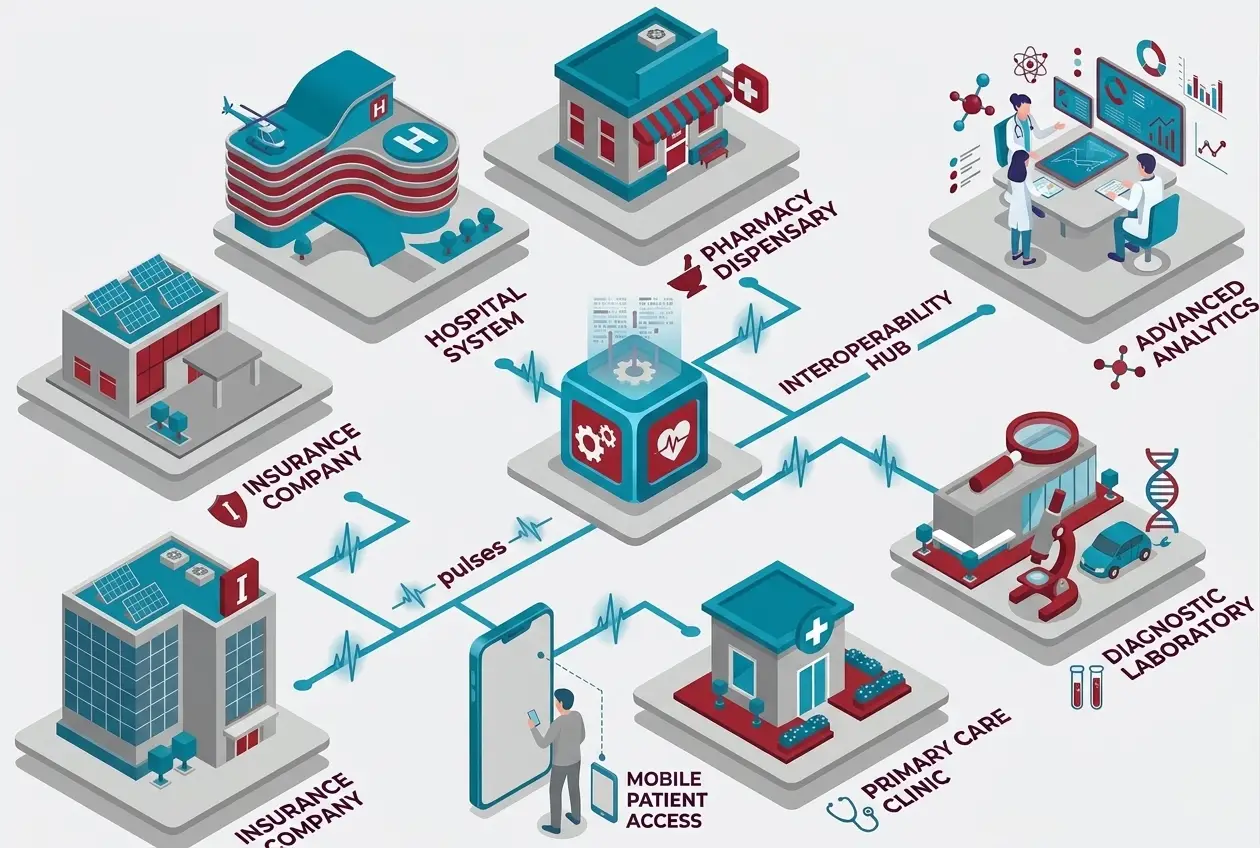
Because the system integrates directly with the EHR, information flows seamlessly between patient interactions and practice workflows.
Artificial intelligence is being used more often in healthcare to automate administrative work and improve efficiency. HIMSS reports that AI use in healthcare is growing quickly, especially in workflow automation and communication support.
For example, the AI can:
- Schedule appointments automatically
- Verify insurance information
- Support patient registration
- Assist with intake processes
- Prepare charts before visits
- Process prescription refill requests
Meanwhile, more complex situations can be escalated to the appropriate staff member for review.
As a result, routine work moves faster.
In fact, practices can reduce the number of routine calls handled manually by staff by up to 80%.
Consequently, employees have more time to focus on patient service, care coordination, and operational priorities.
Improving Revenue While Reducing Overhead
When people hear about AI, they often think about cost reduction.
Certainly, reducing administrative workload can create significant savings.
However, the financial impact goes much deeper.
First, practices can improve schedule utilization.
When cancellations occur, open appointment slots can quickly turn into lost revenue. With intelligent scheduling support, those openings can often be filled faster.
As a result, providers spend less time with unused appointment capacity.
Second, practices can increase patient bookings.
Because patients receive immediate assistance, fewer scheduling opportunities are lost. In some cases, organizations have experienced up to a 20% increase in patient bookings.
Third, staffing challenges become easier to manage.
Recruiting, onboarding, and training new front-desk employees requires both time and money. Therefore, reducing repetitive administrative work can help practices maximize existing resources while lowering the burden on staff.
Finally, patient issues can be resolved faster.
With greater than a 98% first-call resolution rate, patients receive answers sooner and require fewer follow-up interactions.
As a result, both patient satisfaction and operational efficiency improve.
Supporting Staff, Not Replacing Them
Despite growing interest in AI, many healthcare leaders still have one important question.
Will AI replace front-desk staff?
The reality is quite the opposite.
The goal is not to replace people. Rather, it is to help them work more effectively.
AI handles repetitive, high-volume communication tasks. Meanwhile, staff remain focused on the interactions that require empathy, judgment, and personal attention.
For example, employees can spend more time:
- Assisting patients in person
- Resolving complex issues
- Coordinating care
- Building stronger patient relationships
- Supporting clinical teams
In other words, AI removes administrative noise so people can focus on meaningful work.
Ultimately, that creates a better experience for everyone involved.
Creating a More Balanced Front Desk

Healthcare practices face increasing demands every day.
At the same time, staffing shortages, rising patient expectations, and growing administrative workloads continue to challenge operations.
Fortunately, practices do not have to solve these problems alone.
An AI patient contact center helps improve medical practice efficiency by answering every call on the first ring, automating routine tasks, expanding patient access, and supporting revenue growth.
Most importantly, it helps restore balance.
When repetitive work is handled automatically, staff can focus on what matters mostly— providing exceptional patient care and service.
How AI Patient Contact Centers Drive Efficiency, Access, and Growth
As healthcare practices continue to face rising call volumes and staffing pressures, many leaders are turning to automation to improve performance without sacrificing patient care. Below are answers to some of the most common questions about AI patient contact centers.