

Why Payer Changes Are Hurting Your Bottom Line Right Now
If your practice feels like it is working harder but collecting less, you are not imagining it.
Payer rules have changed. Requirements are stricter. And small workflow gaps are turning into real revenue loss.
Right now, many ambulatory practices are seeing a few things occur:
- More claim denials
- Slower reimbursements
- Increased administrative burden
At the same time, staff are stretched thin. Teams are reworking claims instead of preventing issues upfront.
However, here is the good news. These challenges are not permanent. In fact, they point directly to where revenue can be recovered.
So, instead of reacting after the fact, the focus should shift to identifying gaps early and fixing them fast.
What Payer Rule Changes Are Impacting Revenue the Most?
Why Are Reimbursement Models Becoming Harder to Navigate?
To start, reimbursement is no longer just about submitting clean claims.
Payers are tying payments more closely to documentation, coding accuracy, and performance metrics.
As a result, even minor inconsistencies can lead to reduced payments or denials. Meanwhile, practices without clear visibility into these changes often fall behind.
Because of this shift, relying on outdated processes can quietly drain revenue over time.
How Are Prior Authorization Delays Costing You Money?

Next, prior authorizations continue to create friction across the revenue cycle.
More services now require approval. Requirements vary by payer. And missing just one step can delay or deny a claim.
Consequently, many practices are losing revenue before a patient is even seen.
On the other hand, practices that streamline authorization workflows are seeing faster approvals and fewer downstream issues. In fact, many organizations are already finding ways to reduce bottlenecks and improve turnaround times — learn how to reduce prior authorization delays and protect revenue:
For additional perspective on how payer requirements are evolving, visit:
https://www.cms.gov/newsroom
Are You Fixing the Wrong Denial Problems?
At the same time, denial management has become more complex—and more critical.
Many teams track denial reasons at a high level. However, those reasons do not always match the true cause of the denial.
As a result, staff may correct the wrong issue. Then, the same denials happen again.
Therefore, aligning hold reasons with actual denial causes is essential. Without that alignment, revenue recovery efforts fall short.
How Can You Take Back Lost Revenue?
Start With Clear Visibility Across Your Workflow
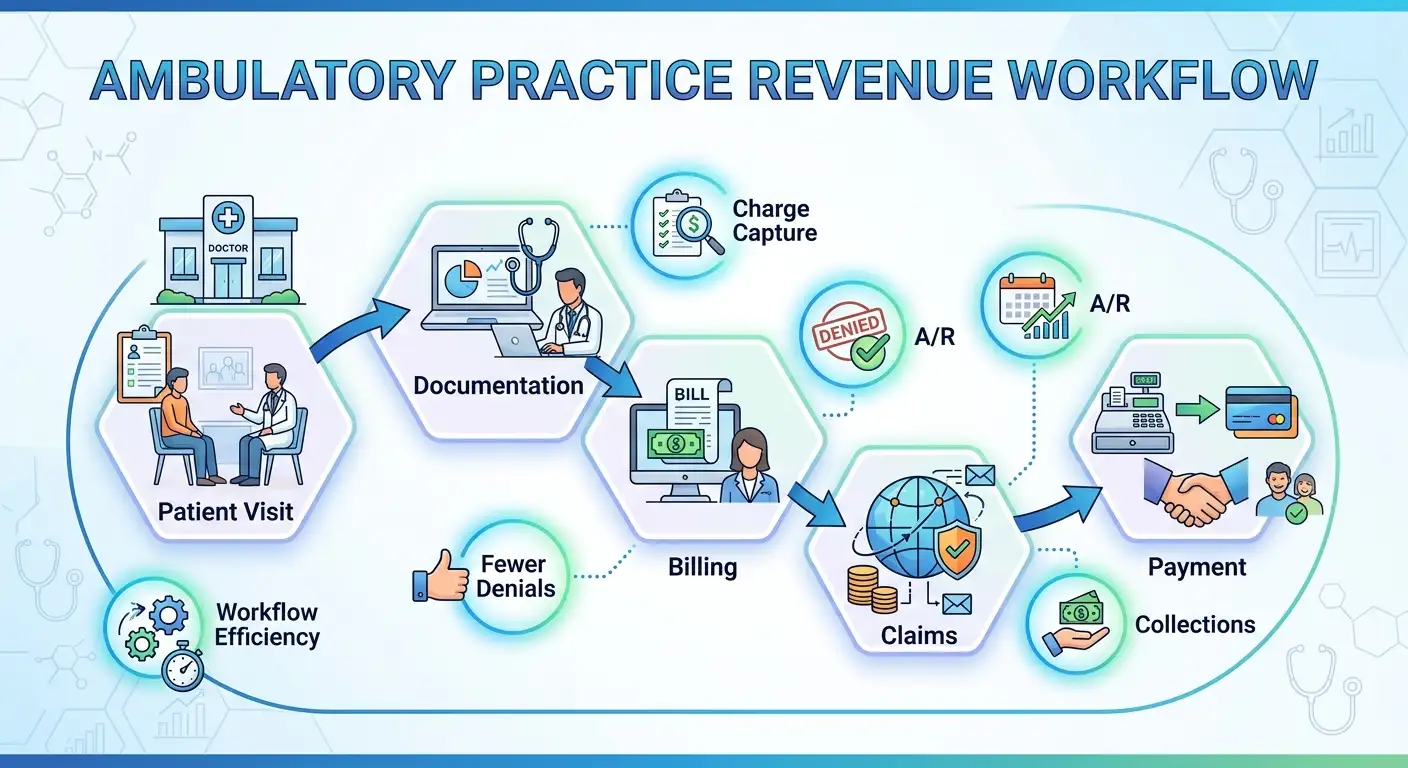
First, you need a complete view of your revenue cycle—from front-end intake to final payment.
Without this visibility, problems stay hidden. Revenue leaks continue. And teams spend time reacting instead of improving processes.
By comparison, connected systems give your team real-time insight into what is working and what is not.
Then, Reduce Manual Work With Smarter Automation
Next, automation helps eliminate common errors that lead to denials and delays.
For example:
- Automated eligibility checks reduce front-end mistakes
- Streamlined prior authorization workflows prevent missed steps
- Coding support tools improve claim accuracy
As a result, your staff can focus on higher-value tasks instead of repetitive corrections.
Also, Strengthen the Link Between Clinical and Billing Data
Equally important, your clinical documentation must support your billing outcomes.
If documentation is incomplete, unclear, or inconsistent, claims are more likely to be denied or underpaid.
However, when your EHR and billing systems work together, documentation improves. Coding becomes more accurate. And reimbursement follows.
Finally, Use Data to Prevent Repeat Issues
Most importantly, your data should guide your decisions.
Instead of guessing, focus on:
- Denial trends and root causes
- Authorization turnaround times
- Reimbursement patterns by payer
With these insights, you can fix issues at the source—not just after they happen.
For broader industry guidance, see https://www.ama-assn.org/practice-management
What Should Your Practice Do Next?
Ask These Questions to Identify Revenue Gaps
- Are your denial reasons aligned with true root causes?
- Do you have real-time visibility into A/R and authorizations?
- Is your team spending more time fixing problems than preventing them?
If any of these sound familiar, your practice may be leaving revenue on the table.
How Virtual OfficeWare Helps You Recover Revenue Faster
At this point, incremental fixes may not be enough. Many practices need a more connected and proactive approach.
That is where Virtual OfficeWare can help.
With solutions designed to support both clinical and billing workflows, your practice can:
- Reduce denials and rework
- Improve cash flow
- Streamline prior authorizations
- Gain real-time performance visibility
Ready to Take Back Control of Your Revenue?

Payer rule changes are not slowing down. However, your revenue does not have to suffer because of them.
With the right tools and strategy, your practice can move from reactive to proactive—and recover revenue that would otherwise be lost.
To see how these workflows come together in real time, explore our solutions.